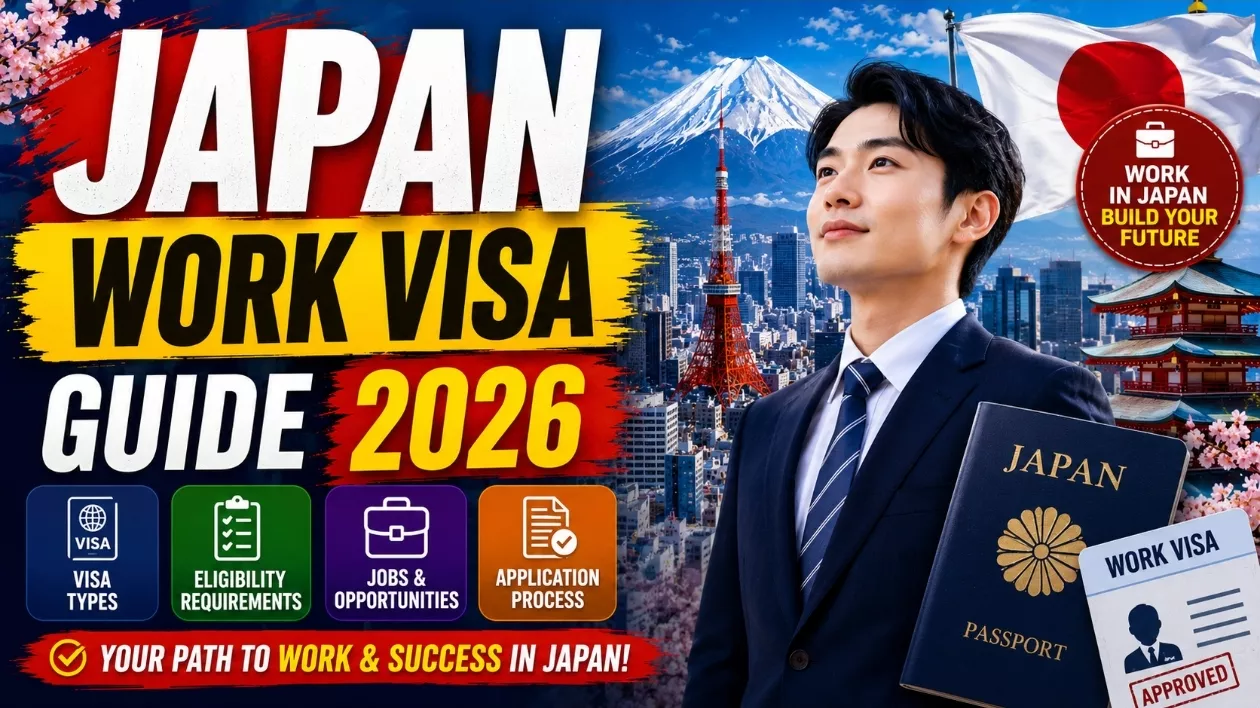
Japan Work Visa Guide 2026
For Indian professionals looking to expand their career globally, grasping the Japan work visa 2026 landscape is crucial. This guide simplifies the complex process of obtaining a work permit in Japan for 2026. It covers the main visa categories, eligibility criteria, and application steps. Whether you’re new to Japan or planning a move, this guide provides essential insights. It helps you understand Japan’s evolving immigration policies with confidence and ease.

Key Takeaways
- Comprehensive overview of work visa options available in Japan for 2026
- Tailored information specifically designed for Indian professionals
- Clear explanation of eligibility criteria and necessary documentation
- Step-by-step guidance on the visa application and approval process
- Insights into working culture and legal requirements for foreign workers
- Practical advice to ease your transition to living and working in Japan
Understanding Work Visas in Japan
For those aiming to work legally in Japan, grasping the Japan work visa types is crucial. A work visa overview Japan shows these visas are tailored for various job types and skills. They are designed to meet the needs of the global workforce in Japan. The Japan employment visa basics allow foreign nationals to work and live legally, offering a clear path for skilled labor in different sectors.
Each visa type is linked to specific professional fields and qualifications. This reflects Japan’s strategic approach to international labor. These visas detail visa validity periods and legal work rights, essential for foreign employment compliance. They are crafted to ease the integration of skilled workers into the local economy.
The structure of work visas in Japan also highlights the country’s dedication to maintaining high labor standards. It ensures employment practices meet national laws and international standards. This system safeguards worker rights and helps industries benefit from global expertise.

For a deeper understanding, here’s a basic outline of Japan’s work visa arrangement:
- Skilled Worker Visa: For individuals with specific expertise in fields like engineering, law, or accounting.
- Intra-company Transfer Visa: For employees of multinational companies being transferred to the Japanese branch.
- Specialist in Humanities Visa: Suitable for experts in fields such as international services, education, and human sciences.
The Japanese work visa system’s flexibility and detail show its effectiveness in managing foreign workforce intake. It promotes economic growth through skilled labor. Thus, understanding and correctly applying for the right visa category is vital for any prospective worker in Japan.
Types of Work Visas Available
For professionals from India aiming to work in Japan, it’s vital to grasp the various Japan work visa categories. Each visa is tailored for specific qualifications and professional backgrounds, opening up diverse career paths in Japan. We’ll delve into three key visa types: the Japan skilled worker visa, the intra-company transfer Japan visa, and the humanities visa Japan.
Skilled Worker Visa
This visa is aimed at professionals with specialized skills, especially in technology and engineering. It allows individuals like IT specialists and engineers to work in Japan, provided they meet certain educational and professional standards.
Intra-company Transfer Visa
Global businesses moving employees between international branches rely on the intra-company transfer Japan visa. This visa enables the transfer of employees from foreign branches to Japan, ensuring smooth operation across borders for multinational companies.
Specialist in Humanities Visa
Experts in education, translation, international relations, or marketing can enter Japan through the humanities visa Japan. Applicants typically need at least a bachelor’s degree in a relevant field to qualify for this category.
Each visa category supports different professional configurations and career paths. It’s crucial for applicants to evaluate their qualifications and the relevance of each visa type carefully.
| Visa Type | Target Profession | Basic Qualification |
|---|---|---|
| Japan Skilled Worker Visa | IT Specialists, Engineers | Professional degree in relevant field |
| Intra-company Transfer Japan Visa | Multinational Company Employees | Current company employment proof |
| Humanities Visa Japan | Educators, Translators | Bachelor’s degree in humanities |

Eligibility Criteria for Japan Work Visa
For Indian professionals looking to work in Japan, it’s crucial to understand the work visa requirements in Japan. The journey to a work visa involves a mix of academic, professional, and sometimes linguistic requirements. A valid job offer from a Japanese employer is the first step.
To meet the Japan visa eligibility standards, applicants must have a bachelor’s degree or higher. Certain visas require additional certifications or licenses, especially for regulated professions. While not mandatory, speaking Japanese can give applicants an advantage in the competitive job market.
The Indian professionals Japan visa criteria also align with Japan’s points-based immigration system. This system favors highly skilled applicants. It assesses them based on education, professional experience, and other factors that benefit Japan’s economy.
| Requirement | Details |
|---|---|
| Education | Bachelor’s degree or higher |
| Professional Experience | Relevant to the job offer |
| Certifications | Required for certain professions |
| Language Skills | Japanese proficiency (beneficial but not mandatory) |
| Points-Based Evaluation | Advantageous for highly skilled professionals |
This table outlines the key requirements for Indian professionals to obtain a work visa in Japan. Meeting these work visa requirements in Japan is essential. It not only ensures legal employment but also facilitates smoother integration into Japanese society and its workforce.
Application Process for Japan Work Visa
The Japan work visa application process is complex, requiring a detailed set of documents for prospective employees. Knowing the exact requirements and following the submission steps can make the process smoother. This approach helps avoid unnecessary delays.
Documents Required for Application
Applicants from India need to gather specific work visa documents Japan demands. These include:
- A valid passport with at least two blank pages.
- A Certificate of Eligibility (COE) — crucially issued by the Japanese Immigration Bureau.
- An employment contract outlining your job terms and conditions in Japan.
- Educational certificates and professional qualifications to prove your expertise.
- A completed visa application form, specific to your work visa type.
Depending on your job or sector, additional documents like a personal resume or professional portfolio might be needed.
Submission Steps and Timeline
The Japan visa submission process starts with getting the COE from your Japanese employer. After that, follow these steps:
- Fill out your visa application form with all necessary documents.
- Submit your application at the nearest Japanese Embassy or Consulate in India.
- Wait for the visa processing, which usually takes 1 to 3 months. This depends on the visa type and document accuracy.
It’s important to stay in touch with the consulate or embassy. This helps track your application and address any issues that come up.
Understanding the Japan work visa application process is key. Knowing the right work visa documents Japan and the Japan visa submission process helps applicants successfully navigate the complexities. This way, they can obtain the necessary permission to work in Japan.
Japan Work Visa Guide 2026
The year 2026 marks a pivotal moment for Japan’s immigration policies, especially for those aiming to work in the country. The introduction of new visa categories and streamlined processes promises to revolutionize the foreign workforce in Japan. These updates aim to attract a more diverse international workforce, addressing economic needs and the demand for specialized skills.
Applicants will find the application process significantly simplified. The option for an e-visa reduces paperwork and speeds up approvals. Japan’s goal is to attract a more diverse workforce, meeting current economic demands and the need for specialized skills in various sectors.
Visa regulations have also been adjusted to benefit more Indians under the new 2026 guidelines. There’s an increase in quotas for sectors facing labor shortages, such as technology, healthcare, and construction. This move aims to address domestic needs while strengthening international relations.
Japan is also introducing advanced digital platforms for visa applications. These platforms simplify the process, ensuring transparency and quicker feedback. This marks a significant improvement in the user experience.
The recent economic developments and policy changes in 2026 create a favorable environment for foreign professionals. By reducing barriers and enhancing visa accessibility, Japan solidifies its appeal as a top destination for skilled labor from India and worldwide.
Popular Industries for Foreign Workers in Japan
Japan’s globalization has led to a significant increase in demand for skilled foreign workers. This is especially true in sectors critical to the country’s growth. We’ll delve into the thriving IT and healthcare sectors, highlighting the opportunities they offer. We’ll also explore other key industries that welcome foreign talent.
Information Technology
In the IT sector, Japan presents a wealth of opportunities for various roles. These include software engineers, developers, cybersecurity experts, and data analysts. The country’s fast-paced technological growth and digital transformation of traditional sectors drive this demand. To address skill gaps, the Japanese government has launched initiatives to attract IT professionals from abroad.
Healthcare Sector
The healthcare sector in Japan is also seeing a surge in demand for foreign workers. With an aging population, there’s a pressing need for skilled healthcare professionals. This includes doctors, nurses, caregivers, and healthcare technicians. Japan has made strides in simplifying visa processes and offering special programs to attract and retain these crucial workers.
Other sectors like engineering, education, and hospitality also present significant opportunities for foreign professionals. These sectors contribute to the growing diversity of foreign worker industries in Japan. They continue to evolve, meeting the increasing needs of the Japanese market.
Transitioning from Study Visa to Work Visa
For many Indian students in Japan, moving from a study visa to a work visa is a pivotal step. It marks the beginning of a promising professional career in Japan. This transition involves several steps and requires attention to timing and eligibility. It’s crucial for a smooth switch.
To start, Indian students need a job offer in a field related to their studies. This job offer is key, proving employment and meeting the visa change criteria. The role must match the student’s qualifications, aligning with their study experience.
With a job offer in hand, the next step is applying for a visa status change. This process is through the Immigration Bureau. Students must present documents like employment proof, passport, and study visa details. It’s vital to apply before the study visa expires to avoid legal issues.
- Document Preparation: Collect all necessary documents, including employment contracts, university transcripts, and passports.
- Filing Application: Submit the visa status change application at the nearest Immigration Bureau.
- Attend Interview: Some cases may require a personal interview, so be ready to discuss your study and work plans.
- Begin the process early to allow time for paperwork and approvals.
- Stay in touch with your educational institution and employer for any needed documents.
- Consulting with a visa specialist or legal expert can offer additional guidance and security.
Understanding these steps and applying on time can significantly boost your chances of a successful transition. It allows Indian students to start their professional journeys in Japan, not just dream about it.
Renewal and Extension of Work Visas
For professionals in Japan, grasping the intricacies of work visa renewal and extension is essential. As their visas near expiration, they must navigate the renewal process to maintain employment continuity. This guide aims to clarify the process and highlight common pitfalls to ensure a smooth visa renewal.
Understanding the Renewal Process
Preparation is paramount for Japan work visa renewal. Applicants must apply before their current visa lapses. The renewal application demands updated employment proof and compliance with Japanese immigration laws. A clean legal record and adherence to employment conditions are crucial for a successful extension. Any significant employment changes, such as a new employer or role, must be documented.
Common Reasons for Visa Denial
It’s vital to understand visa denial reasons in Japan to avoid common pitfalls. Reasons for denial include incomplete paperwork, non-compliance with visa conditions, and undocumented employment changes. A criminal record or application discrepancies can also jeopardize approval.
Living and Working in Japan
Moving to Japan for work is an exciting adventure, but it requires a smooth transition into the local culture. This guide offers essential living in Japan tips and insights into working in Japan culture, helping newcomers from India adapt seamlessly to their new environment.
Understanding the nuances of adapting to Japanese work life is crucial for professional and personal growth in Japan. It’s important to respect the structured work environment, punctuality, and hierarchy. These elements are key to success in the Japanese workplace.
Cultural Adaptation Tips
Adapting to a new culture means appreciating and following its workplace etiquettes and social norms. Here are practical strategies to ease your transition:
- Observe and emulate local workplace behaviors, especially the emphasis on timeliness and respect for hierarchy.
- Language proficiency can significantly ease your adaptation process, consider taking regular Japanese language classes.
- Engage with local communities and participate in cultural activities; this enhances your understanding of Japan beyond the workplace.
Participation in company and community events is not just encouraged but often expected in Japanese culture. Such engagements are seen as building blocks for trust and cooperation among colleagues.
| Cultural Aspect | Tip | Benefit |
|---|---|---|
| Workplace Etiquette | Always arrive on time or early to meetings. | Shows respect and reliability, important in Japanese business culture. |
| Social Interaction | Participate in after-work social activities. | Helps build closer bonds with Japanese colleagues and understand their work-life balance. |
| Problem Solving | Discuss issues directly with the involved parties avoiding public confrontations. | Respects the Japanese preference for harmony and discreet conflict resolution. |
The journey of integrating into a new culture while maintaining one’s own identity can be challenging yet rewarding. Embracing these practices will not only help in successfully adapting to Japanese work life but also in experiencing Japan’s rich culture fully.
Conclusion
This guide has covered the essential aspects of Japan work visas, including types, eligibility, and application steps. It’s vital for Indian professionals aiming to thrive in Japan’s dynamic job market. Keeping up with policy changes and industry trends can boost your visa application success.
Applicants should focus on detailed preparation and accuracy in their application documents. Professional advice can be invaluable in navigating complex regulations. Embracing cultural diversity and adapting to local work environments will aid in a smooth transition and personal growth.
With the right strategy and informed decisions, job opportunities in Japan can be very promising. This summary aims to empower you with the knowledge and confidence for your journey. By following the advice provided, Indian professionals can look forward to enriching experiences and career growth in Japan.